Uni5 Healthy Body
- Details
- Parent Category: Earth Therapy
- Category: Whole Foods
- Hits: 14161
Processing of Grains - Rice
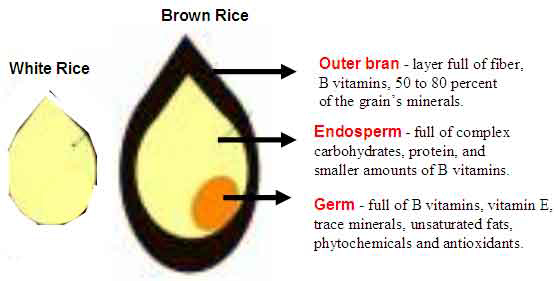
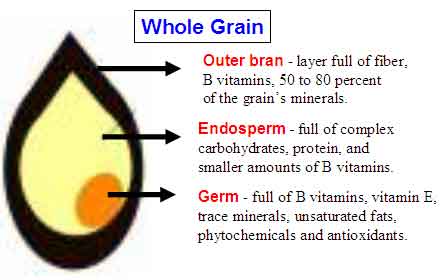
All three parts of a grain are needed for the nourishment of our body. If all three parts of a grain are present in processed foods, they are considered whole grain. By comparison, refined grainscontain only the endosperm. When the germ and bran portions are removed during milling, the nutrient content is reduced by 25 to 90 percent. Most refined grain foods are enriched with some of the nutrients lost in milling.
B Complex Vitamins https://www.nobelprize.org/prizes/medicine/1929/eijkman/lecture/
A research paper on Indigenous rice varieties of India.
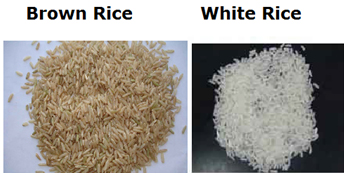
For example, in the case of rice, Black Rice, Red rice and Brown rice are covered with bran layer, that densely wraps around each grain. Brown or cargo rice is high in fiber, protein and vitamins. Polishing brown rice removes the bran layer which is rich in vitamins and nutrients, resulting in white rice.
Best rice is Black, followed by red and then brown and worst is white rice.
|
Parboiled rice is an intelligent, ancient technique to preserve the nutrients by soaking, cooking, drying paddy along with its husk before milling. Due to this process, the nutrients leach from the bran into the endosperm layer. When the rice is polished, the nutrients are not completely lost. Parboiled rice is a processed rice which is more healthy than white rice but cannot compete with the nutritional value of brown rice. Brown rice , though nutritionally good, is hard for many to digest. There are three ways to make it soft and very tasty. 1. Soaking brown rice overnight in water. Soaking causes the phytates to break down so that vitamins and minerals and other nutrients are freely available to be absorbed. 2. Add more water while cooking. Usually for white rice, water is added in the ratio of 1: 1.5 or 2 (One to one and a half or two). For brown rice the ratio should be 1:2.5 or 3 (One to two and a half or three). This makes the rice really soft. 3. Cooking in a pressure cooker. If that is not an option, then cooking time should be 10-15 minutes more than white rice.
Please click here to continue reading |
- Details
- Parent Category: Earth Therapy
- Category: Whole Foods
- Hits: 9143
Refined Foods & Toxins
When we eat food that is refined, i.e. white rice, white flour, white semolina, white sugar or refined breakfast cereals and other processed foods, the toxins do not leave the body but get re-absorbed and this results in various diseases.

In the Sakthi Clinic, under the section on diabetes we have given details about how fiber rich foods Vs refined foods cause slow release of sugar or glucose into the blood stream helping diabetes. Fiber rich whole foods used on a regular basis will help to prevent many diseases like diabetes, cholesterol and hyper-tension.
Modulation of Metabolic Detoxification Pathways Using Foods and Food-Derived Components: A Scientific Review with Clinical Application
Detoxification- Best
https://www.ncbi.nlm.nih.gov/pubmed/?term=Virechana
https://www.ncbi.nlm.nih.gov/pmc/articles/PMC4488002/
https://www.ncbi.nlm.nih.gov/pubmed/?term=ayurveda++cytochrome+P450
https://www.ncbi.nlm.nih.gov/pubmed/27030208
https://www.ncbi.nlm.nih.gov/pubmed/26870691
https://www.ncbi.nlm.nih.gov/pubmed/26657265
https://www.ncbi.nlm.nih.gov/pubmed/26139922
https://www.ncbi.nlm.nih.gov/pubmed/24690772
https://www.ncbi.nlm.nih.gov/pubmed/24177191
https://www.ncbi.nlm.nih.gov/pubmed/26006029
- Details
- Parent Category: Earth Therapy
- Category: Whole Foods
- Hits: 9528
Soaking and Sprouting
Sprouting and eating grains or beans is good for health. Traditional cultures all over the world have the practice of soaking and sprouting grains and beans. Soaking makes the grain soft and also causes less gas in the intestines. Brown rice should be soaked and cooked with excess water than the white rice for a softer texture. All types of beans and dals (legumes), soaked and cooked with spices especially ginger and garlic will not cause gas problems in the intestines.
Scientists say that eating fiber rich and unrefined products, as is the modern, urban practice, causes anemia and other mineral deficiencies. Traditional cultures had the practical wisdom of soaking and sprouting foods. Soaking, sprouting or fermenting causes nutritional improvements and increased availability of nutrient for absorption. Sprouting and fermentation cause a breakdown of phytates in foods which otherwise would not release bound iron to be absorbed by the intestines. Iron has to be in soluble form in our foods to prevent anemia.
In a study with grains, it was found that cooking had no effect on the amount of soluble iron. Iron solubility increased, however, two to four times after soaking and germination, three to five times after fermentation and five to eight times after fermentation of the germinated flour samples and was highly correlated to the reduction of hydrolyzed phytates (International Journal of Food Sciences and Nutrition, Volume 50, Number 3 / June 1, 1999 Pages: 203 - 211 ).
Therefore, the traditional practices of soaking, sprouting and fermenting are the best ways to consume grains and beans. Now modern research is discovering the importance of sprouting. To get more information Click here to read about the Nutritional Content of Sprouts. You will read after two pages about the benefits of fermentation. Before that, in the next page you will read how an unholisitc view of modern research has caused havoc in health.
Please click hereto continue reading
- Details
- Parent Category: Earth Therapy
- Category: Whole Foods
- Hits: 8433
Stone Ground Whole Grains
People who want to start eating more whole grain foods are often unsure about how to find them. The key is knowing which words to look for and which ones to avoid.
“100% wheat” - means that the only grain contained in the product is wheat. The food may not contain whole wheat. It is not the 100% of one grain that is important, but to see if it is the whole grain.
“Multigrain” - A word that means the product contains more than one kind of grain. The food may not contain whole grains. It might be a combination of many refined grains.
“Stone ground”-This term refers to grain that is coarsely ground and may contain the germ, but not the bran. Stone ground flour is more healthy than the refined, bleached flour because it contains the bran. Milled flour removes the bran.
Soaked and cooked whole grains are better than whole grain stone ground flour, especially for diabetics, high cholesterol and hypertensive patients, because whole grains contain bran and the endosperm, the fiber rich portion.
Please click "Next" on the right side to continue reading.
- Details
- Parent Category: Earth Therapy
- Category: Whole Foods
- Hits: 11000
Sugar
In 1965, the Sugar Research Foundation (SRF) secretly funded a review in the New England Journal of Medicine that discounted evidence linking sucrose consumption to blood lipid levels and hence coronary heart disease (CHD). SRF subsequently funded animal research to evaluate sucrose's CHD risks. The sugar industry did not disclose evidence of harm from animal studies that would have (1) strengthened the case that the CHD risk of sucrose is greater than starch and (2) caused sucrose to be scrutinized as a potential carcinogen. The influence of the gut microbiota in the differential effects of sucrose and starch on blood lipids, as well as the influence of carbohydrate quality on beta-glucuronidase and cancer activity, deserve further scrutiny.
https://www.ncbi.nlm.nih.gov/pubmed/29161267
https://blog.onco.com/sugar-cancer-project-259/
This sweet has often influenced the health of the world but more dramatically, the modern world. Refined white sugar is white poison. You will understand why it is a poison, when you understand that it destroys many organs. Unrefined brown sugar also causes a damaging effect, but lesser than white sugar. So, wherever possible, use unrefined brown sugar or jaggery. These contain nutrients unlike white sugar.
Sugar is made up of glucose which is the energy "currency" for the body cells. Without glucose the cells in our body do not have energy and so cannot function properly. All carbohydrates that we eat are digested and broken down to glucose in the intestine and are absorbed into the bloodstream. From there, they are transported to the liver and other organs. However, high levels of glucose in the blood will cause serious damage to organs. The normal blood sugar or glucose level should not exceed 100-120 mg/100ml of blood. When this level is in excess it is called diabetes.
Sweet Damage.
Insulin is a hormone secreted by the pancreas to maintain blood sugar. If the blood sugar is high, insulin will push the excess blood sugar into the liver and muscles. If the blood sugar level rises suddenly, the body has to work very hard and gets tired quickly. It is less stressful for the body if the blood sugar rises slowly.
 Let us imagine a situation where the crowd picks up gradually in a restaurant. It is less stressful for the waiters and hotel crew to serve food in this situation. Imagine how much more difficult it would be if a restaurant crowded suddenly and everyone needed attention from the hotel crew at the same time.
This is how it is when we eat foods with no fiber. Fiber allows glucose to enter the blood slowly and so the organs like liver and pancreas involved in maintaining these levels are less stressed.
When we eat foods with no fiber we put our internal body under massive amounts of strain. Suddenly, the glucose rushes to the blood from the intestines like a mad, restless, hungry crowd entering a restaurant. When the crowd is restlessly waiting, the hands of adults and especially kids would do all sorts of damage to the furniture and walls of the restaurant. Similarly, when the sugar levels rapidly increase in blood, they cause oxidative damage to the walls of the blood capillaries and to other organs.
So, healthy food is one which increases blood sugar slowly and causing less stress to the body handling the sugar crowd.
Cytoprotective and antioxidant activity studies of jaggery sugar
Research new on Health benefits of raw-sugar.
Iron deificient anemia and raw sugar
Sugarcane Molasses - A Potential Dietary Supplement in the Management of Iron Deficiency Anemia.
Phytochemical profile of sugarcane and its potential health aspects. Refinedsugar is the primary product of sugarcane juice, but during its processing, various other valuable products are also obtained in an unrefined form, such as, brown sugar, molasses, and jaggery. Sugarcane juice is widely used in India in the treatment of jaundice, hemorrhage, dysuria, anuria, and other urinary diseases. Herein, we have summarized the different phytoconstituents and health benefits of sugarcane and its valuable products.
Total antioxidant content of alternatives to refined sugar.
Antioxidants and other functional extracts from sugarcane
Antioxidant Activities of a Tricin Acylated Glycoside from Sugarcane (Saccharum officinarum) Juice
Immunostimulating effects of the polyphenol-rich fraction of sugar cane (Saccharum officinarum L.) extract in chickens.
The interest in polyphenols, including flavonoids and phenolic acids, has considerably increased in recent years because of their possible role in the prevention of oxidative stress induced diseases such as cardiovascular complications, diabetes, ulcers and cancer (Halliwell, 2007; Repetto & Llesuy, 2002; Sachidanandam, Fagan, & Ergul 2005; Shah, Baliga, Rajapurkar, & Fonseca, 2007). Sugarcane (Saccharum officinarum) contains phenolic compounds (Fontaniella et al., 2003) and these compounds have also been found in sugar products such as syrup or molasses and in brown sugar (Palla, 1982).
However, the presence of these phytochemicals in sugarcane juice is often undesirable, as they influence the quality and colour of final product sugar and hence these phytochemicals are removed through various purification procedures in the sugar industry. Jaggery and brown sugar are the least processed sugars containing polyphenols. The brown sugar was also known to possess ABTS [2,20 -azinobis (3-ethylbenzothiazoline-6-sulfonic acid) and DPPH (2,2-diphenyl-1-picrylhydrazyl) radical scavenging activity (Payet, Cheong Sing, & Smadja, 2005; Takara, Matsui, Wada, Ichiba, & Nakasone, 2002).
White and refined sugars undergo extensive purification procedures for the removal of phenolic compounds. The bioactivity of these sugars can be anticipated, as they contain phytochemicals to different extent depending on their manufacturing process. Jaggery is the main source of sugar in rural India and has been considered by many Ayurveda practitioners as a wholesome sugar.
Indian Ayurvedic medicine considers jaggery to be beneficial in treating throat and lung infections. Sahu and Saxena (1994) have found that jaggery can prevent lung damage from particulate matter such as coal and silica dust in rats. However, there are no reports available in the literature on cytoprotective abilities of jaggery and other sugars and their comparative evaluation.


Polyphenol extracts from dried sugarcane inhibit inflammatory mediators in an in vitro colon cancer model
Sugarcane-derived polyphenols decrease diet-induced obesity
Therefore, red sugarcane
may be more suitable for the production of nutraceuticals with
antioxidant activities. https://www.sciencedirect.com/science/article/pii/S0926669018300165
Please click here to continue reading